
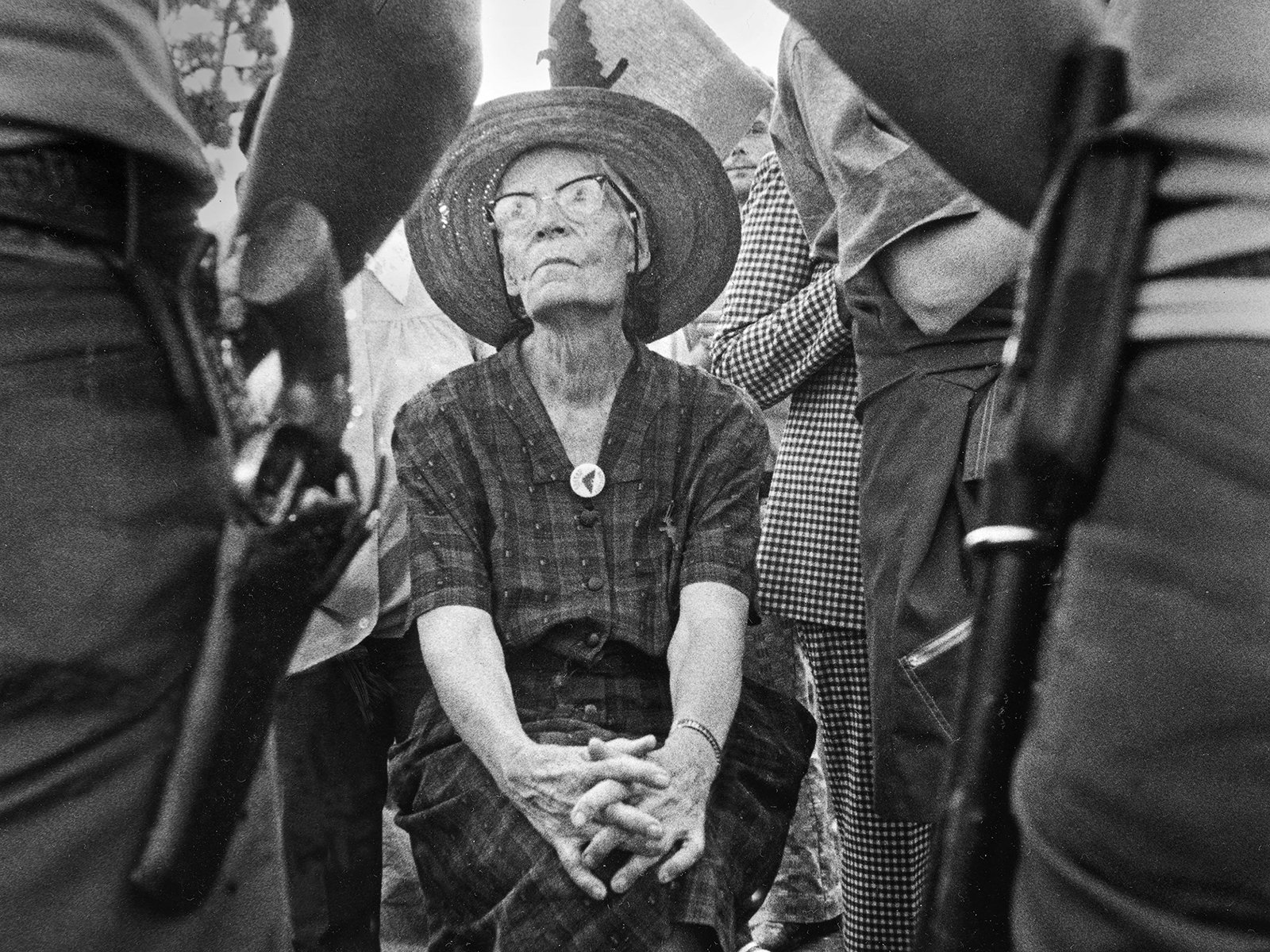
(RNS) — It is rare for the close relatives of a candidate for sainthood in the Catholic Church to be alive, much less able to observe the process. Yet at a Vatican symposium, “A Pilgrim of Hope: An Academic Symposium on the Legacy of Dorothy Day,” on Wednesday (Nov. 26), the grandchildren of Dorothy Day were able to hear how others think about her work as a founder of the Catholic Worker movement, and introduce many to the woman they knew.
“What I really want to do is to share her with others, share her with you,” said Martha Hennessy, Day’s granddaughter, who is a Catholic Worker herself and peace activist who runs farms in Vermont. “She did belong to the world, but she also belonged to her family. So, I just want to share some stories about family life.”
RELATED: On Dorothy Day’s birthday, the life and work of the last living Catholic Worker who knew her
Day currently holds the title “Servant of God,” the first formal stage in the canonization process. Her local diocese has completed its investigation into her life and submitted evidence and testimony to the Vatican’s Dicastery for the Causes of the Saints. If approved, the pope would declare her “Venerable,” recognizing that she lived a life of heroic virtue. From there, beatification and canonization typically require two miracles attributed to her intercession.
The process has moved slowly in Rome, with the Vatican taking its time. Among the advocates for her cause, sustaining public engagement and promoting reflection on her life are crucial as the church shows little urgency.
So, while the audience heard from Kevin Ahern, a leading advocate for her sainthood and a member of Manhattan University’s Dorothy Day Guild, which works to preserve and promote Day’s legacy of charity, pacifism and spirituality, the symposium emphasized recollections from those who knew her.

Dorothy Day’s grandchildren Martha Hennessy, left, and Kate Hennessy, right, participate in the Vatican-hosted symposium titled “A Pilgrim of Hope: An Academic Symposium on the Legacy of Dorothy Day,” on Nov. 26, 2025, in Rome. (Video screen grab)
One such person is Robert Ellsberg, the religious publisher and author who dropped out of Harvard in 1975 at age 19 to join the Catholic Worker movement in New York City. Day asked him to become the managing editor of its newspaper, the Catholic Worker, and he worked closely with Day until her death in 1980, and would go on to publish Day’s letters and diaries, most notably in “The Duty of Delight: The Diaries of Dorothy Day,” in 2008.
“This year marks the 50th anniversary of my encounter with Dorothy Day,” Ellsberg said. “I decided to take a little time off from college, which turned into five years, and quite soon I got hooked there (at the New York Catholic Worker). Kind of lost track of time.”
Some believe that Day’s cause for sainthood has been slowed because her life, which unfolded largely in New York, challenges the church’s comfort and conscience. In the Catholic Worker and elsewhere, she wrote relentlessly about workers’ rights and the lives of the marginalized. She also purchased buildings to house people living in poverty and chose to live among them, and was jailed for protesting war and nuclear weapons. She routinely refused to pay income taxes as an act of conscience.
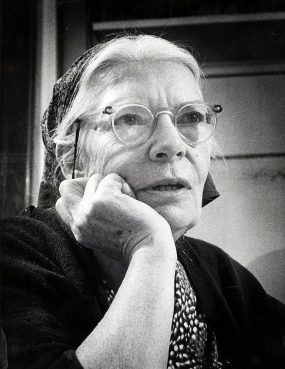
Dorothy Day in 1968. (Photo courtesy of Milwaukee Journal/Marquette University Archives)
Cardinal Timothy Dolan, the archbishop of New York, who recently commissioned a large mural that includes a portrait of Day in the city’s St. Patrick’s Cathedral, appeared via a prerecorded video, saying the archdiocese is “really proud of her.” He called the symposium meeting “appropriate.”
“She belongs to the world; she belongs to the church universal,” Dolan said. “We look for the day when the church universal can recognize that by edifying her on the first step towards canonization. Thanks for doing it, everybody.”
Martha Hennessy, who was accompanied by her sister Kate Hennessy, anchored Day’s spiritual power very intimately in her grandmother’s physical presence.“When I was 3 years old, I remember sitting on Dorothy’s lap,” Martha said. “I do believe that that experience of having my ear on her chest, hearing the resonation of her voice and hearing her heartbeat, that, for me, was an incarnational experience of God.”
With her works, the houses of hospitality, Martha said, her grandmother showed her how to integrate faith into one’s daily life, and the daily lives of others.
“I would describe life and work at Maryhouse as the agony and the ecstasy,” Martha said, referring to the movement’s New York outpost. “The skills that we need at Maryhouse are, can you cook a lot of food, can you be nice when you serve the food, and can you help clean up on a regular basis?”
Kate, a writer and artist living in Ireland who published the book “Dorothy Day: The World Will Be Saved by Beauty, An Intimate Portrait of My Grandmother” in 2017, framed Day’s legacy as an enduring moral challenge.
Hennessy talked about the institutional, economic, political and personal ways Day continues to challenge both Catholics and society at large.
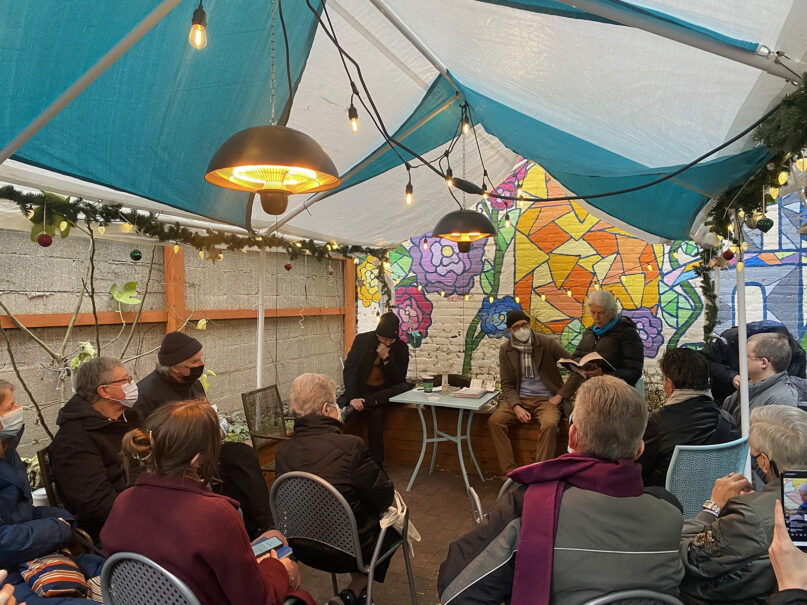
FILE – Martha Hennessy, right, Dorothy Day’s granddaughter and a member of New York’s Maryhouse Catholic Worker community, reads an excerpt from her grandmother’s book “On Pilgrimage” in the courtyard of the Vineapple Cafe in New York, Dec. 8, 2021. (RNS photo/Renée Roden)
“I think it would be an utter tragedy if those of us who lived privileged and protective lives choose to see Dorothy the saint, as a way to comfort ourselves,” she said. “I have seen over the years many attempts to tame her, conform her, or when that is impossible, to dismiss or ignore her. Dorothy asks us to see the world suffering and to not turn away and say, I can do nothing.”
She noted that Day often taught the power of small acts, likening them to a pebble whose ripples extend far beyond what we can see. In an emotional tone, Kate said her grandmother believed there is always something humanity can offer, which is Christ-like love, even in the face of vast suffering.
“I suggest that we all be terrified of what she is asking of us to gaze clearly on,” Kate said. “In the here and now, to grasp faith and trust with all we have, even if it is by our bleeding fingertips.”
A legacy, she warned, should never be sanitized or turned to for personal comfort. Kate prefaced her remarks by acknowledging the emotional weight of her grandmother’s life and canonization cause. “This topic is so emotional for me, I’m going to cry through it,” she said.
RELATED: Mural unveiled at St. Patrick’s Cathedral sends a message on immigration
Nearly 50 years after Day’s death, her legacy lives on not only in the church’s canonization deliberations in Rome, but in the grief and love her grandchildren continue to carry forward.
“We will all feel grief in our love as we open our hearts, for we will now know what we have and what we are in danger of losing,” Kate said. “What a gift, what a task we all have before us.”
